If you've spent any time shopping for premium dog food, you've probably seen the term "human grade" splashed across bags and cans with pride. But what does it actually mean, and why should you care? Understanding the difference between human grade and feed grade pet food isn't just marketing noise. It's a real, legally defined distinction that can tell you a lot about the quality, safety, and integrity of what you're feeding your dog, something that we at Evapup take very seriously.
What Is Human Grade, Really?
"Human grade" isn't just a marketing phrase, it's a specific standard with two strict requirements:
- Every single ingredient must be legally edible for humans. Not "technically non-toxic." Not "byproduct that's close enough." Every component, from the protein source to the smallest vitamin additive, has to meet the same standards used for food sold in a grocery store.
- The finished product must be made in a facility licensed for human food production. This is the part most people don't realize. It's not enough for the ingredients to start out human edible, the entire manufacturing process, from receiving to packaging, has to happen under the same regulatory standards as food made for your own table.
So What About Feed Grade?
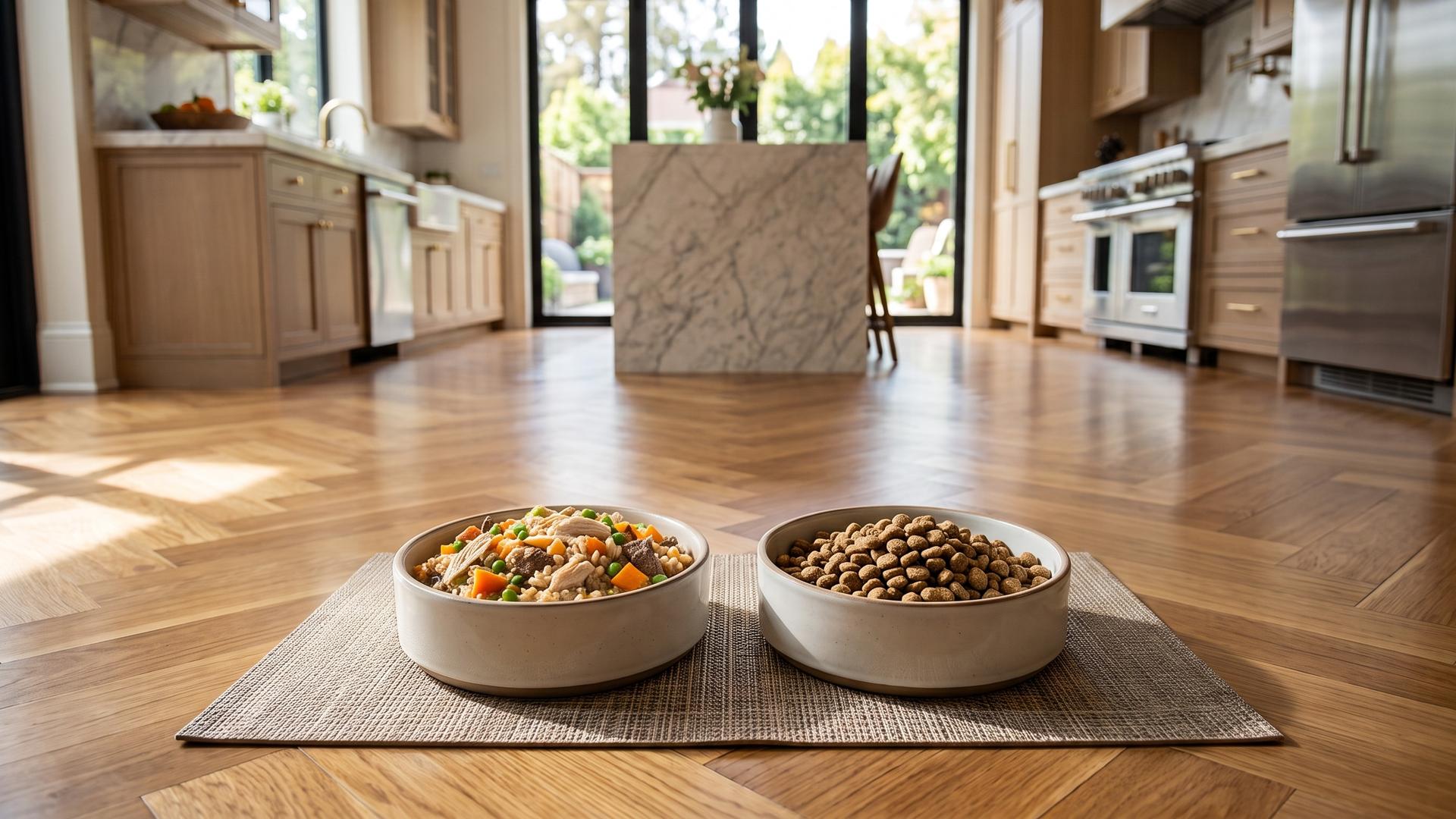
Feed grade is the category most conventional pet food falls into. A feed-grade ingredient or additive is something that's approved and intended for use in animal feed - but was never meant for, and often wouldn't pass inspection for, human consumption.
This doesn't automatically mean feed-grade ingredients are unsafe. Regulatory bodies do set standards for animal feed. But those standards are meaningfully looser. Feed-grade ingredients can include meat byproducts, damaged grains, or additives permitted in animal feed but restricted or banned from the human food supply. The facilities producing feed-grade food also operate under a different, less stringent set of rules than human food manufacturing plants.
Why Are People Choosing Human Grade Dog Food?
For a growing number of dog owners, feed grade simply isn't good enough anymore, and it's easy to see why:
- Higher, verifiable quality control. Human food facilities are subject to more rigorous inspection, sanitation, and traceability requirements. When your dog's food is made in one of these facilities, there are more checkpoints working in your favor.
- Cleaner ingredient sourcing. Human-grade standards eliminate the ambiguity around "meat meal" or "animal digest" - ingredients have to be identifiable, edible, and sourced the same way food for people is sourced.
- Trust and transparency. Pet owners increasingly want to know exactly what's going into their dogs' bodies, the same way they've become label readers for their own food. Human grade offers a clear, legally enforceable answer rather than a vague promise.
- Treating dogs as family. For many owners, dogs aren't just pets - they're family members. Feeding them food that meets the same standard as everyone else at the table feels like a natural extension of that relationship.
A Major Bonus: Children's Safety
There's another reason human grade matters that doesn't get talked about enough: little ones get into everything, and dog bowls are no exception. Any parent knows that toddlers and young children are drawn to exploring the world at floor level - which sometimes means a curious taste of what's in the dog's dish before anyone can stop them. Parents, let's be real, you can't keep an eye on the little ones 24/7, and sometimes mistakes happen. Kids get into dog food all the time; let's make sure that if that happens, you have nothing to worry about.
With feed-grade food, that moment can trigger real worry. With human-grade dog food, it's a non-issue. Because every ingredient is legally edible for humans and made in a facility held to human food safety standards, a child accidentally getting a taste isn't a health scare - it's just a slightly funny parenting story. That peace of mind, for households with young kids or grandkids running around, is a quiet but meaningful reason many families make the switch.
The Bottom Line
The difference between human grade and feed grade isn't a matter of branding - it's a matter of ingredients, facilities, and accountability. Human grade dog food asks more of every step in the process, and in return, it offers something feed grade simply can't: the same standard of trust you'd expect from your own food. Here at Evapup, we know that the four-legged furry members aren't just pets, they are a part of the family, so why wouldn't you feed them like it?